A science-backed investigation into the toxic burden of modern life, why your body cannot cope alone, and how a targeted herbal detox can restore your health from the inside out.
Fully Referenced Article by Brett Elliott, Medical HerbalistBrett Elliott explains the science behind the Ultimate Herbal DETOX program
My Ultimate Herbal DETOX program is New Zealand's most trusted detox program by health professionals and retailers. After reading this page you will no longer be a skeptic. You will see the desperate need we have in our modern world for an annual detox program. This article is not my opinion. It is fully backed by links to scientific research.
There are many skeptics when it comes to detox programs. They say it is a scam, there is no evidence, and your body detoxifies itself. This view is understandable but is simply based on a lack of information. This article addresses those skeptics with science and logic.
A toxin is any substance that interferes with normal healthy functions, often simply by getting in the way. Smoke and fog combine to form smog that blocks healthy lung function. In virtually the same way, flour and water combine to form glue that blocks healthy bowel function. Toxins come in many forms: chemicals, pharmaceutical drugs, heavy metals, alcohol, cigarettes, air pollution, exhaust fumes, cleaning agents, artificial food additives, and metabolic acid, through to less commonly considered toxins such as noise, negative emotions, and chronic stress.
Research identifies six main categories of toxins that accumulate in the modern human body.
Air, water, and soil contamination from industrial chemicals, car emissions, pesticides, and heavy metals accumulate silently in tissues and organs over decades.
Properly prescribed medications cause 2.74 million serious adverse drug reactions annually. The liver is not designed to detoxify synthetic compounds.
Artificial sweeteners, preservatives, colors, and flavors in processed foods increase toxic load, suppress enzyme activity, and fuel systemic inflammation.
Over 145,000 registered industrial chemicals exist worldwide. Many are endocrine disruptors found in cleaning products, plastics, and personal care items.
Metabolic syndrome, mercury accumulation, lactic acidosis, and excess fructose all generate internal toxic waste that overwhelms the liver and kidneys.
Chronic stress triggers immune suppression, hormonal disruption, arterial plaque buildup, and psychiatric illness. Emotional toxicity is as real as chemical toxicity.
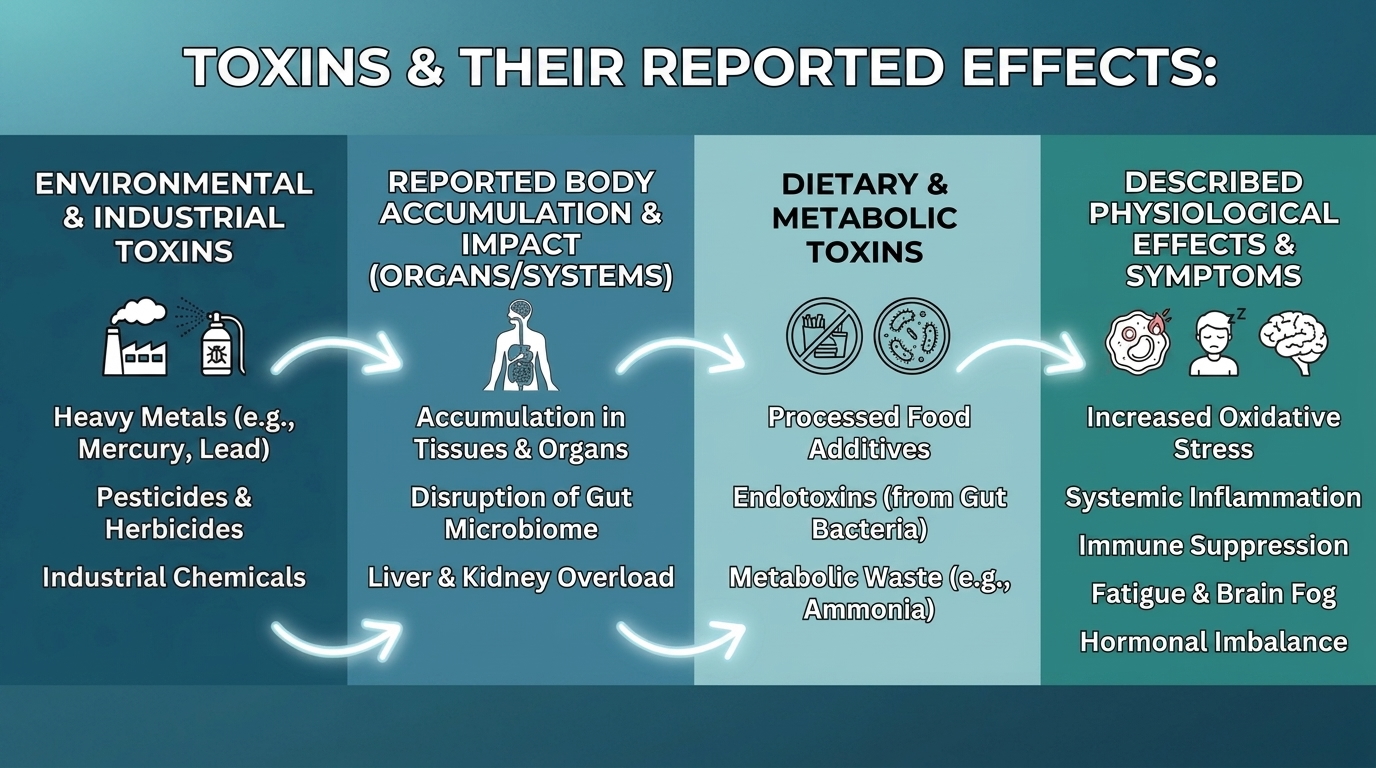
Infographic: The pathway from environmental and dietary toxins to physiological symptoms
Toxins accumulate silently. Many people live with chronic symptoms for years without realising their toxic burden is the root cause. Answer a few simple questions and find out your toxin score in minutes.
Takes less than 2 minutes · Instant results
Interview with Oliver Broudy, author of The Sensitives, on environmental chemical exposure and human health
The World Health Organization reports that in 2012 around 7 million people died, one in eight of total global deaths, as a result of air pollution exposure. [5] Pollution is the largest environmental cause of disease and premature death in the world today. Diseases caused by pollution were responsible for an estimated 9 million premature deaths in 2015, representing 16% of all deaths worldwide. That is three times more deaths than from AIDS, tuberculosis, and malaria combined, and 15 times more than from all wars and other forms of violence. [20]
Outdoor air pollution deaths break down as follows:
The health impact of outdoor air pollution: what the research shows
Study: Living close to heavy traffic is associated with a higher incidence of dementia [18]
Any and all chemicals generated by human activity can and will find their way into water supplies. Source-water contaminants of concern include arsenic, asbestos, radon, agricultural chemicals, and hazardous waste. [17] Arsenic is linked to cancers of the liver, lung, bladder, and kidney. Chlorination by-products are associated with an increased risk of bladder and rectal cancer, possibly accounting for 5,000 cases of bladder cancer and 8,000 cases of rectal cancer per year in the United States alone. [17]
Chronic arsenic contamination may affect cognition and personality, and may precipitate psychotic symptoms including delusions and hallucinations. [11]
Few people know that systematic reviews of hospital records found that even properly prescribed drugs cause about 1.9 million hospitalizations per year. A further 840,000 hospitalized patients are given drugs that cause serious adverse reactions, for a total of 2.74 million serious adverse drug reactions annually. About 128,000 people die from drugs prescribed to them each year in the United States. [6] This makes prescription drugs a major health risk, ranking fourth alongside stroke as a leading cause of death.
The European Commission estimates that adverse reactions to prescription drugs cause 200,000 deaths annually in Europe. Together, approximately 328,000 patients in the US and Europe die from prescription drugs each year. [6]
The body is not designed to detoxify synthetic drugs, especially the liver. Natural and safe alternatives should always be given the opportunity to reverse a condition before toxic drugs are used. Food can also be used as medicine, especially where sensible dietary changes can meaningfully impact the outcome.
The pharmaceutical drug epidemic: adverse reactions, hospitalisations, and the case for natural alternatives
Processed, refined food products are virtually enzyme and nutrient-devoid. They do not provide the natural, life-giving properties that real food should. Flavors, colors, and artificial sweeteners in man-made, processed foods all contribute to fatigue and increase your toxic load.
Reports link aspartame to seizures, headaches, mood disturbances, and reduced mental performance. A 2005 study suggested it may cause leukemia and lymphoma in rats. A 1996 study linked its consumption to increased rates of brain tumors. [8]
This common preservative may increase hyperactivity in children. In soft drinks it can react with added vitamin C to form benzene, a known cancer-causing substance. [8]
Approximately 34,000 cancer deaths per year worldwide are attributable to diets high in processed meat. Carcinogenic chemicals including N-nitroso compounds and heterocyclic aromatic amines form during processing and cooking. [9]
A significant portion of the population reports gastrointestinal and systemic symptoms from wheat and gluten ingestion, even without celiac disease. This condition is now recognized as non-celiac gluten sensitivity. [10]
How processed foods and artificial additives increase your toxic load and undermine your health
Sodium benzoate, aspartame, and other common food additives: what the research reveals
Stockholm University found that today there are around 145,000 registered industrial chemicals in the world, and by no means all of these are tested and guaranteed safe. The spread of dangerous chemicals in our everyday environment could lead to a global human catastrophe. "If we get exposed to endocrine disruptors at the wrong time in life it can have serious effects," says Professor Ake Bergman. "A number of human diseases can be caused by exposure to chemicals. We do not know yet how many, but research is ongoing."
There can be over 100 types of parasites and worms living in the human body. These organisms consume nutrients, excrete waste directly into the bloodstream, and suppress immune function. Regular internal cleansing is one of the most effective strategies for reducing parasitic burden.
Both organic and inorganic mercury have been linked to the pathological and neurochemical changes seen in Alzheimer's disease. In humans, one of the likely sources of organic mercury such as methylmercury is the consumption of contaminated fish. Dental amalgams are a common source of inorganic mercury. [11]
Metabolic syndrome can be induced by overfeeding with sugar or fructose, particularly combined with a high processed-fat diet. Excessive fructose ingestion creates a toxic metabolic burden on the liver. Metabolic syndrome can cause abdominal obesity, high blood pressure, high blood sugar, and elevated cholesterol. Severe metabolic acidosis can lead to shock or death. [13]
We do not often think of our emotions as potentially toxic, but the evidence is clear. Studies show that while short-term stress can boost the immune system, chronic stress has a significant and measurable effect on immune function that ultimately manifests as illness. [14]
A toxin can be seen as anything that serves no beneficial purpose within you, is difficult for your body to process, consequently builds up, causes inflammation and oxidation, and eventually interferes with healthy functions and disrupts internal communications. Have you ever experienced interference with a radio, cell phone, or television signal? This is very similar to how toxins affect your body internally, physically, emotionally, and mentally. Static, poor reception, bad sound, and unclear picture can all occur within you.
The Ultimate Herbal DETOX addresses all of these areas by cleansing the colon, liver, parasites, and heavy metals, providing pure food support, and supporting your emotional wellbeing. By doing so, you can regain your full energy supply and vitality.
New Zealand's most trusted herbal detox range, developed by Medical Herbalist Brett Elliott

Every day you are exposed to hundreds of toxins your body was never designed to process. An annual herbal detox is not a luxury. It is one of the most important things you can do for your long-term health. Start today.
View the Ultimate Herbal DETOX