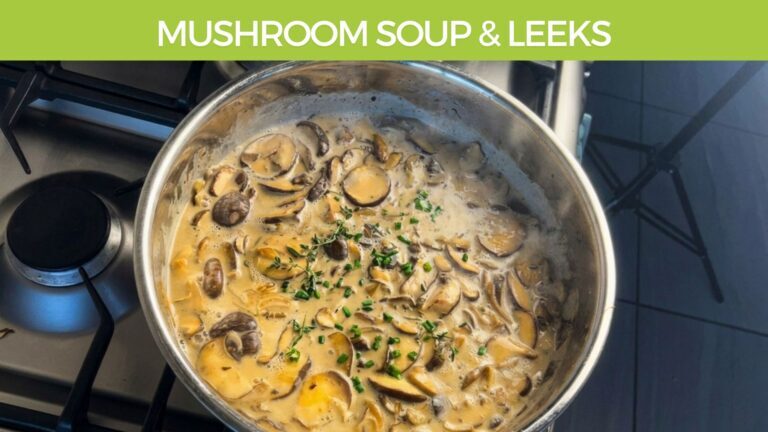
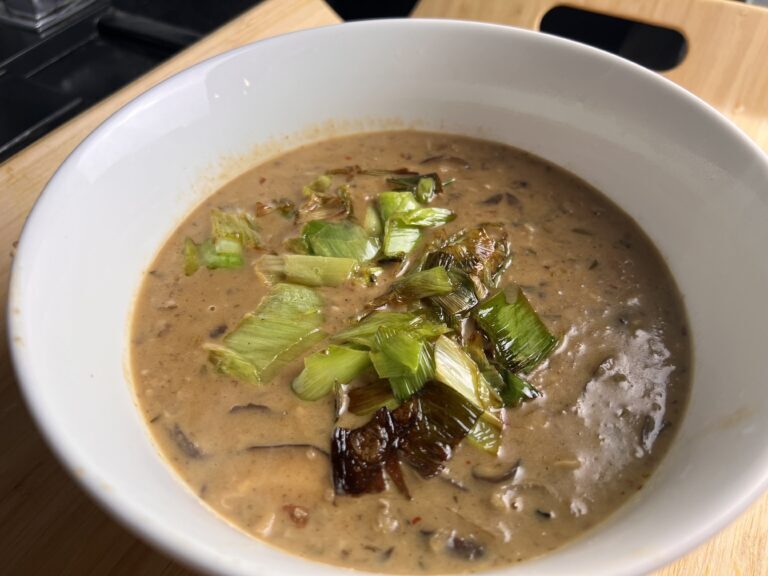
A rich, nourishing mushroom soup packed with immune-supportive shiitake mushrooms, anti-inflammatory herbs, garlic, and creamy coconut. Made entirely from fresh ingredients with no stock cubes or artificial flavourings.
Why You’ll Love This Recipe
There is something deeply satisfying about creating a meal entirely from fresh ingredients harvested straight from the garden. Every ingredient contributes not only flavour but also nutrition, transforming this soup into a comforting bowl of functional food.
Unlike many mushroom soups that rely on commercial stock powders and cream, this recipe builds its flavour naturally through slow caramelisation of onions, garlic and herbs. The result is a soup with remarkable depth of flavour while remaining dairy-light and rich in plant-based nutrients.
Whether you’re looking for a warming winter meal, an immune-supportive lunch or simply a delicious homemade soup, this recipe delivers nourishment in every spoonful.
Recipe Information
Preparation Time: 20 minutes
Cooking Time: 35–40 minutes
Total Time: Approximately 1 hour
Servings: 3–4 large bowls
Difficulty: Easy
Dietary: Gluten-free (if using gluten-free Worcestershire sauce), Dairy Optional
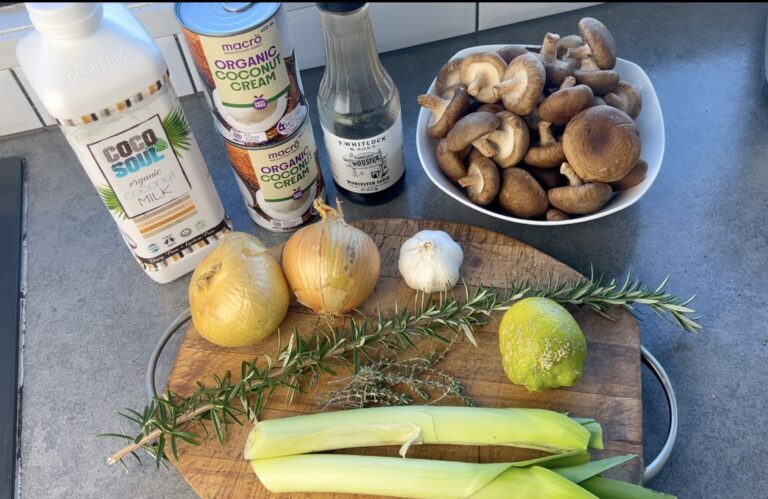
Ingredients
- 250–300 g fresh shiitake mushrooms, finely chopped
- 2 large onions, finely chopped
- 12 cloves (1 bulb) of garlic, finely chopped
- 2 large leeks
- 2–3 sprigs fresh thyme
- 1 sprig fresh rosemary
- Juice of 1 lime
- 25 g butter
- 2 tablespoons coconut oil
- 4 tablespoons Worcestershire sauce
- 1 teaspoon cayenne pepper
- 1 teaspoon chilli flakes
- 1 can organic coconut cream
- 1 can organic coconut milk
- Olive oil (for frying)
- Sea salt and freshly ground black pepper
Instructions
Step 1 – Prepare the vegetables
Finely chop the onions, garlic and shiitake mushrooms.
Remove the thyme leaves from their stems and finely chop the rosemary.
Slice the leeks into chunky pieces and set them aside separately, as they will be fried just before serving.
Step 2 – Build the flavour base
Heat the butter and coconut oil in a large saucepan over medium heat.
Add the onions, garlic, cayenne pepper, chilli flakes and Worcestershire sauce.
Cook gently for around 10 minutes, stirring regularly until the onions become golden brown and begin sticking slightly to the bottom of the pan.
This caramelisation develops the rich, savoury flavour that makes homemade soups so satisfying.
Step 3 – Cook the mushrooms
Add the chopped mushrooms together with the thyme and rosemary.
Stir thoroughly until every piece of mushroom is coated in the onion mixture.
Continue cooking for several minutes until the mushrooms soften and release their natural moisture.
Unlike many commercial recipes, no stock cubes are needed. The vegetables themselves create an intensely rich broth full of natural flavour.
Step 4 – Add the coconut
Pour in the coconut cream and coconut milk.
Stir until smooth.
If needed, add a small amount of water to achieve your preferred consistency.
Squeeze in the lime juice and season with sea salt and black pepper.
Reduce to a gentle simmer for 20–30 minutes.
Slow cooking allows the mushrooms, herbs and spices to blend into a wonderfully balanced soup.
Step 5 – Blend
Using a stick blender, partially puree the soup.
Leave some mushroom pieces intact to provide texture while creating a thick, creamy consistency.
Step 6 – Prepare the crispy leeks
Heat a frying pan with olive oil and a small knob of butter.
Cook the leek chunks until golden brown and crisp around the edges.
These become the perfect garnish, adding sweetness and texture.
Step 7 – Serve
Ladle the soup into bowls.
Top generously with crispy fried leeks.
For anyone sensitive to chilli, finish with a swirl of natural yoghurt to mellow the heat while adding a pleasant creaminess.
Nutrition Highlights
Each bowl provides an abundance of naturally occurring nutrients including:
- Plant-based fibre
- Potassium
- Selenium
- B vitamins
- Vitamin C
- Manganese
- Healthy medium-chain fats from coconut
- Polyphenols and antioxidant compounds
- Beta-glucans from shiitake mushrooms
Health Benefits of the Ingredients
Shiitake Mushrooms
Shiitake mushrooms are among the world’s most researched medicinal mushrooms. They contain unique polysaccharides known as beta-glucans, particularly lentinan, which have been shown to support healthy immune function. Shiitake mushrooms also provide ergothioneine, a powerful antioxidant that helps protect cells from oxidative stress, along with minerals such as selenium, copper and zinc that contribute to immune health.
Garlic
Garlic has been used medicinally for thousands of years. Crushing fresh garlic activates allicin, a sulphur-containing compound with antimicrobial activity. Garlic has also been studied for its potential role in supporting cardiovascular health, healthy cholesterol levels and normal immune function.
Leeks
Leeks belong to the allium family alongside garlic and onions. They provide prebiotic fibres that nourish beneficial gut bacteria while supplying vitamin K, folate and antioxidant flavonoids that support digestive and cardiovascular health.
Rosemary and Thyme
These aromatic herbs contain concentrated essential oils and polyphenols that contribute antioxidant and anti-inflammatory activity. They not only enhance flavour but also provide a wide range of protective phytochemicals.
Coconut Milk
Organic coconut milk provides healthy medium-chain triglycerides (MCTs), which are rapidly metabolised for energy. Its natural creaminess also allows this soup to remain rich and satisfying without relying heavily on dairy.
Brett’s Herbal Kitchen Tip
One of the simplest ways to improve your health is to replace processed foods with meals made entirely from whole ingredients. Every onion, mushroom, herb and clove of garlic contributes thousands of naturally occurring phytochemicals that work together in ways science is only beginning to understand.
Nature rarely relies on a single active ingredient—it creates synergy. Much like an orchestra, each plant plays its own part, but together they produce something far greater than the sum of their individual notes.